The standard automatic drip coffee maker has suffered from decades of poor engineering in the consumer appliance market. Historically built to hit low price points, mass-market drip brewers utilized aluminum heating elements that scorched water, single-hole spouts that drilled craters into the coffee bed, and hot plates that baked the resulting brew into bitter sludge. However, the modern batch brewer has undergone a dramatic architectural overhaul, guided by the rigorous standards of specialty coffee.
SCA Certification and Thermal Dynamics
The Specialty Coffee Association (SCA) maintains a certified home brewer program, which acts as a reliable benchmark for hardware quality. To achieve certification, a drip machine must meet strict parameters regarding time, temperature, and extraction yield.
The most critical of these is thermal stability. The machine must heat water to a range of 195°F to 205°F and maintain that temperature uniformly throughout the brew cycle. High-end brewers achieve this by abandoning cheap aluminum blocks in favor of copper boiling elements—similar to those found in commercial espresso machinery. Copper possesses superior thermal conductivity, allowing the machine to flash-heat water rapidly and consistently, preventing the sour under-extraction typical of cheap brewers.
Dispersion and the Showerhead
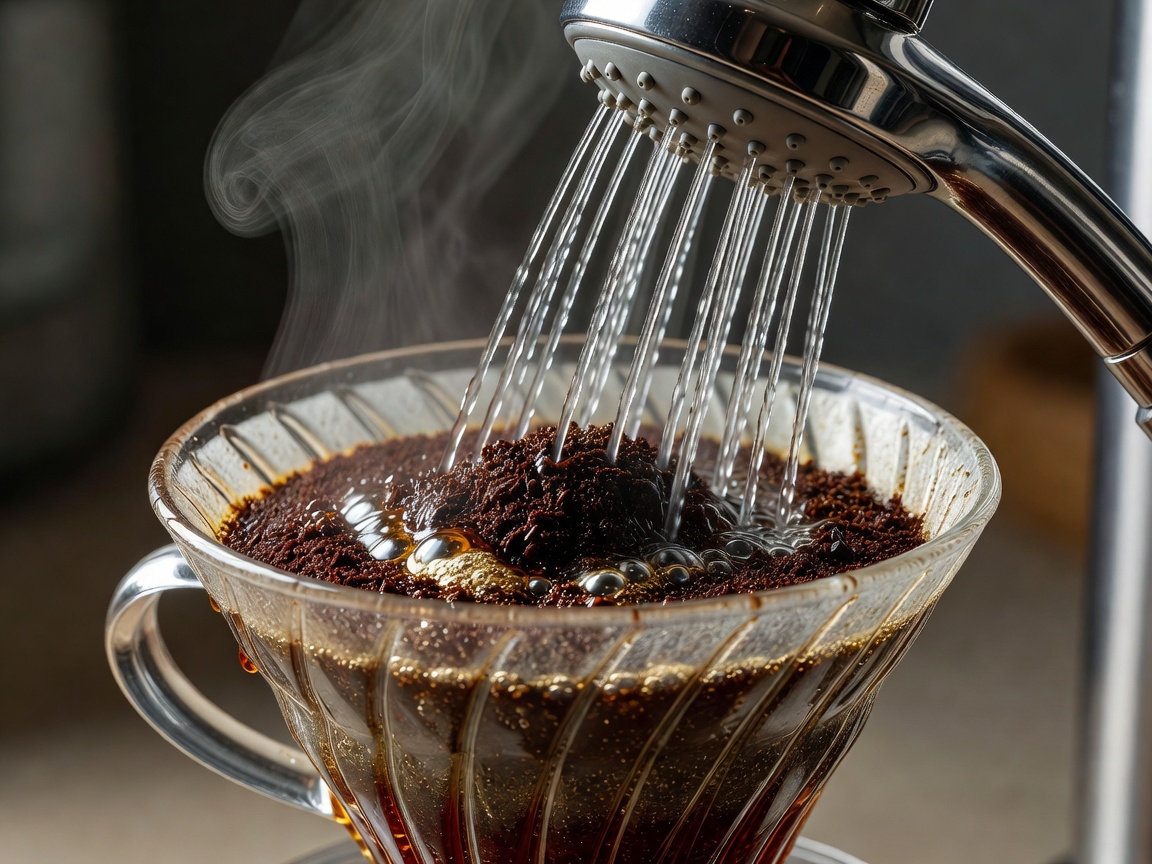
Water delivery is equally important to water temperature. A single spout creates a narrow column of water that bypasses the perimeter of the coffee bed, leading to localized over-extraction in the center and under-extraction at the edges.
Premium drip machines solve this via wide showerheads. By utilizing five, nine, or even twenty distinct exit holes, the machine disperses water evenly across the entire surface area of the coffee grounds. This uniform saturation mimics the technique of a skilled barista executing a manual pour-over. Furthermore, advanced machines incorporate a "bloom" cycle. They dispense a small amount of water to wet the grounds, pause for 30 to 45 seconds to allow trapped carbon dioxide to escape, and then resume the brewing process. This prevents channeling and drastically improves flavor clarity.
Carafe Materials: Glass vs. Thermal
The destination of the brewed coffee heavily dictates its final sensory profile. The industry has largely moved away from the traditional glass carafe sitting on a PTFE-coated heating element. A hot plate continuously adds thermal energy to the brewed coffee, accelerating the degradation of complex organic acids into harsh quinic acid—resulting in the distinct "burnt" flavor associated with diner coffee.
- Glass Carafes (with intelligent heating): Some modern brewers still use glass, but employ PTC (Positive Temperature Coefficient) heating elements that gently maintain a temperature around 175°F for a strict maximum of 40 minutes before auto-shutoff.
- Stainless Steel Thermal Carafes: The preferred solution for coffee integrity. A vacuum-insulated double-wall stainless steel carafe traps heat passively. While they must be pre-heated with hot water for maximum efficiency, they preserve the coffee's aromatic compounds for hours without adding the destructive heat of a hot plate.
Filter Geometry
The shape of the filter basket plays a subtle but vital role in fluid dynamics. Flat-bottom baskets (often utilizing wave-style filters) encourage a more even extraction, drawing out sweet and balanced notes. Conical baskets force the water through a deeper, narrower bed of coffee, highlighting acidity and bright, floral characteristics. The choice of basket geometry is often baked into the machine's architecture, making it a critical consideration for the prospective buyer.
Today’s premium drip coffee architectures prove that batch brewing does not necessitate a compromise in quality. By stabilizing temperature, engineering proper dispersion, and protecting the final product from oxidative heat stress, the automated drip machine can stand shoulder-to-shoulder with meticulous manual methods.