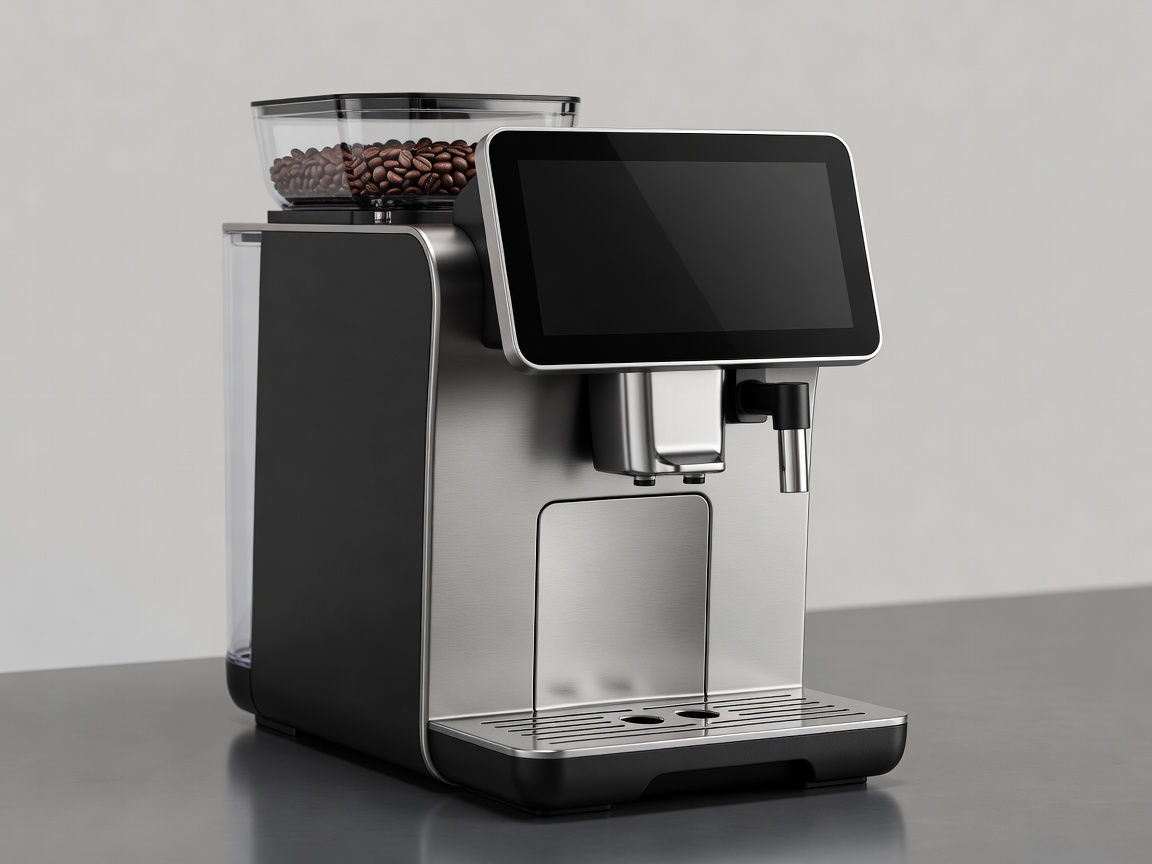
The super-automatic coffee machine exists at the intersection of complex mechanical engineering and consumer demand for absolute convenience. Often referred to as "bean-to-cup" machines, these devices take the analog processes of grinding, dosing, tamping, extracting, and milk texturing, and consolidate them into a single microchip-controlled unit. However, removing human interference inherently demands engineering compromises.
The Integrated Brew Group
The core innovation of the super-automatic is the internal brew group. When a user presses a button, the internal logic board commands the grinder to operate for a specific duration. The resulting grounds fall via a chute into the brew chamber. Mechanical actuators physically compress the chamber to simulate a barista's tamp, sealing the puck against a shower screen. A pump then forces heated water through this compressed block.
The primary compromise here is dose size and grind capability. Most super-automatic brew groups max out at 10 to 14 grams of coffee, significantly lower than the standard 18 to 22 grams utilized in modern specialty coffee shops. Furthermore, to prevent the internal mechanics from choking or jamming, the integrated grinders are typically calibrated to produce a coarser grind than what is ideal for traditional espresso. The result is often a shot that resembles a very strong, pressurized filter coffee rather than a syrupy, highly concentrated manual espresso.
Milk Texturing Automation
Milk steaming involves injecting high-velocity steam into cold milk, causing proteins to unspool and fats to emulsify, creating microfoam. Automating this requires distinct approaches:
- The Panarello Wand: A sheath placed over a traditional steam pipe. It features an air intake hole that automatically injects air into the milk as steam passes through. It creates foolproof, bubbly foam suitable for traditional cappuccinos, but is generally incapable of creating the glossy, wet-paint texture required for latte art.
- Integrated Carafes (Siphons): High-end units feature attachable milk jugs that use a Venturi effect. Steam passing across a narrow aperture creates a vacuum, siphoning milk from the carafe, mixing it with steam and air inside a manifold, and depositing hot foam directly into the cup. This provides ultimate one-touch convenience but requires rigorous daily cleaning of the siphon tubes to prevent bacterial growth.
Maintenance and Longevity Constraints
While super-automatics remove the skill barrier of brewing, they replace it with a stringent maintenance barrier. Coffee oils are highly adhesive and turn rancid quickly when exposed to air and heat. An internal brew group that handles damp grounds and hot water multiple times a day is a prime environment for mold and scale buildup.
Unlike a manual machine where the portafilter is easily removed, scrubbed, and dried, a super-automatic relies on automated rinse cycles. However, water alone does not dissolve accumulated coffee oils. Many systems feature removable brew groups that the user must take out and rinse weekly under a tap. Other, fully sealed systems require the regular use of specialized enzymatic cleaning tablets. If these maintenance cycles are ignored, internal components will seize, leading to expensive repairs.
The Verdict on Convenience
Purchasing a super-automatic requires acknowledging the transaction taking place: you are trading peak sensory quality for unmatched efficiency. A $1,500 super-automatic will never produce a shot of espresso equal to a $1,500 manual setup. However, it will produce a consistently acceptable beverage in under 60 seconds with zero technique required, while you are half-asleep on a Tuesday morning. For many households and office environments, this trade-off is not just acceptable; it is deeply preferred.