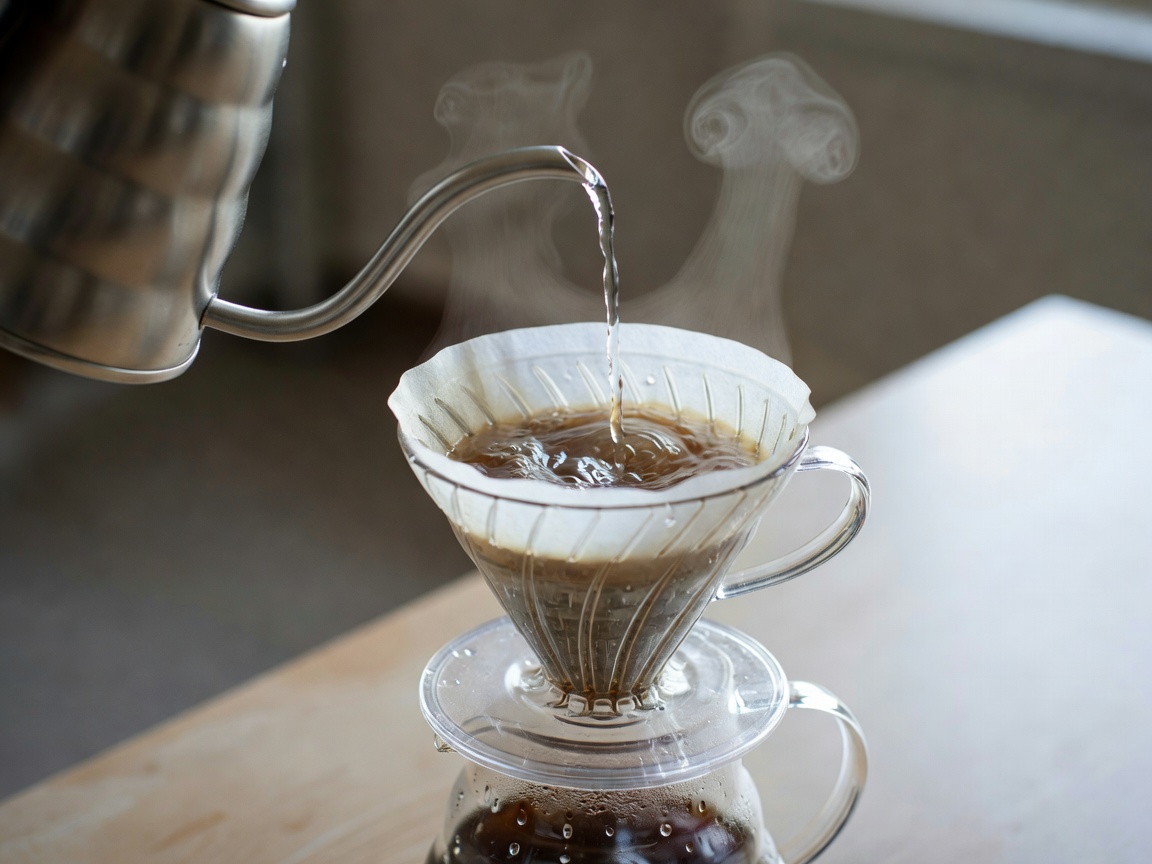
The manual pour-over is arguably the purest expression of coffee brewing. Stripped of pumps, boilers, and microprocessors, it relies entirely on thermodynamics, gravity, and the geometric interactions between water, filter media, and ground coffee. Because the hardware is minimalist, every subtle variation in the equipment's design drastically alters the cup's final chemical composition.
The Physics of Dripper Geometry
The vessel holding the coffee grounds dictates the flow rate and the path water takes before exiting into the carafe. Drippers fall into two broad architectural categories:
Conical Drippers: Characterized by a 60-degree angle leading to a single large exit hole. Conical geometries create a deep bed of coffee. Water must travel through a thicker mass of grounds, which increases the contact time in the center but risks bypassing grounds at the shallow edges. Conical setups require exact pour control to maintain agitation and prevent channeling. They are prized for producing brews with vibrant acidity, complex floral notes, and a lighter body.
Flat-Bottom Drippers: These utilize a wide, flat base with three or four smaller restriction holes. The flat bottom ensures that the bed depth is uniform across the entire surface area. This symmetry significantly reduces the margin for human error, ensuring that water contacts all coffee particles equally. The resulting extraction tends to highlight sweetness, chocolate notes, and a heavier, more viscous body.
Filter Media: Paper, Metal, and Cloth
The filter is the physical barrier determining which insoluble materials and lipids enter the final beverage. It is a critical piece of hardware often overlooked as a mere consumable.
- Paper Filters: The standard for clarity. High-density paper traps nearly all diterpenes (coffee oils) and microscopic fines. This produces a translucent, clean cup where delicate flavor notes are easily separated on the palate. However, poor-quality paper can impart a strong papery taste unless aggressively pre-rinsed with boiling water.
- Metal Mesh: Woven stainless steel or photo-etched metal filters allow oils and a significant amount of microscopic sediment to pass through. The result is a heavy, opaque cup reminiscent of a French Press. Metal filters mask delicate fruit notes but amplify mouthfeel and heavy roast characteristics.
- Cloth (Nel Drip): A historic Japanese method, cotton flannel filters capture the silty fines of paper while allowing the rich oils of metal to pass through. They offer an unparalleled silken texture but require extreme maintenance—they must be boiled regularly and stored in water in a refrigerator to prevent off-flavors.
The Necessity of the Gooseneck Kettle
Executing a proper pour-over without a gooseneck kettle is an exercise in frustration. The long, slender, curved spout is engineered to restrict flow rate. This allows the user to pour a thin, precise, and steady stream of water. Precise water placement controls agitation—the physical turbulence that knocks coffee particles around, ensuring they are evenly exposed to the solvent. Furthermore, variable temperature electric gooseneck kettles allow the user to dial in temperatures down to the single degree, a necessity when brewing extremely light roasts that require near-boiling water (205°F) versus dark roasts that easily over-extract and require cooler temperatures (185°F).
The pour-over is a study in manual control. By selecting specific geometries and filter media, the brewer acts as their own pump, showerhead, and algorithm, yielding a cup that is a direct reflection of their technique and hardware choices.